Advancements and Trends Shaping the Future of Aluminum Casting in Engineering Solutions
Advancements in aluminum casting are changing design services. Developments in casting techniques, particularly high-pressure die casting and financial investment casting, are enhancing accuracy and layout versatility. Automation and smart technologies play an important duty in maximizing manufacturing performance. Sustainability is coming to be a concern, with green materials acquiring traction. As these trends evolve, they will redefine sector requirements and consumer assumptions. What effects might these modifications hold for the future of production?
Breakthroughs in Casting Methods
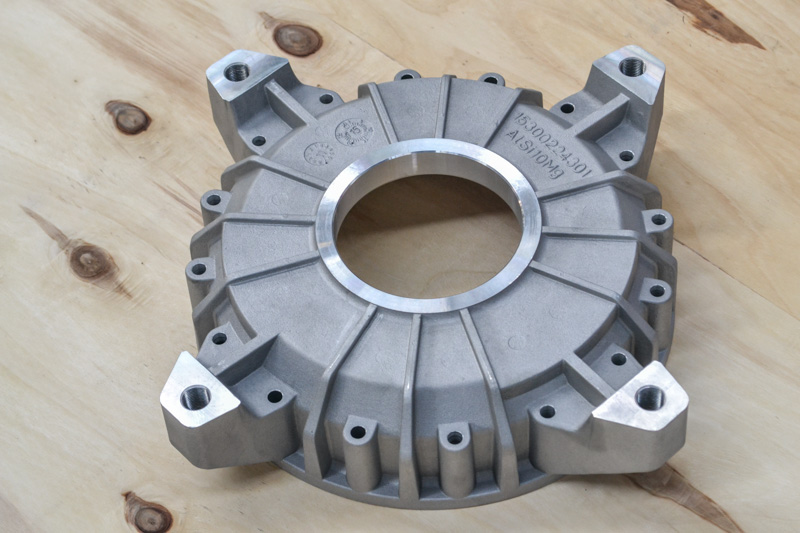
The Function of Automation in Aluminum Casting
Automation plays an essential role in enhancing the aluminum casting procedure by greatly enhancing manufacturing performance. By incorporating innovative innovations, suppliers can improve operations and reduce cycle times (Aluminum Castings). Additionally, automation adds to enhanced high quality control, making certain regular item criteria and lessening problems
Boosted Manufacturing Effectiveness
Transforming the aluminum casting sector, automation considerably enhances manufacturing performance. Automated systems streamline different stages of the casting procedure, reducing manual work and lessening human error. High-speed robotic arms can precisely handle molds, making sure consistent and rapid manufacturing cycles. On top of that, advanced computer system formulas maximize the scheduling and administration of sources, causing lowered downtime and enhanced operations. Automation likewise enables for real-time surveillance and changes, allowing producers to react quickly to any kind of functional concerns. By carrying out automated procedures, companies can boost result while preserving cost-effectiveness. Ultimately, this change in the direction of automation not just increases efficiency but likewise positions producers to meet the growing needs of the market with better dexterity and sustainability.
Enhanced Quality Control
A considerable innovation in aluminum casting is the assimilation of computerized quality assurance systems, which boost item uniformity and minimize problems. These systems utilize sophisticated sensors and data analytics to keep an eye on the casting process in real-time, permitting immediate adjustments based on top quality metrics. Automation lessens human mistake and raises the integrity of inspections, guaranteeing that each part fulfills strict specifications. By executing device discovering algorithms, producers can forecast prospective failings and proactively address concerns before they rise. This not just enhances the general top quality of aluminum products but likewise enhances the manufacturing process, resulting in increased performance and cost savings. Eventually, boosted quality assurance through automation represents a transformative action in the aluminum casting market.
Smart Technologies and Sector 4.0 Combination
The combination of clever technologies and Sector 4.0 in aluminum casting is revolutionizing production processes. With the Internet of Points (IoT) boosting real-time surveillance, automation and robotics are simplifying operations, while data analytics supply vital understandings for optimization. These developments are establishing new requirements for performance and precision in the industry.
IoT in Casting Processes
Exactly how can the assimilation of IoT technologies boost the effectiveness and accuracy of aluminum casting processes? The application of IoT in casting allows real-time tracking of temperature, stress, and other critical specifications, ensuring suitable problems throughout manufacturing. Sensing units linked to the cloud can accumulate and assess information, facilitating predictive maintenance and minimizing downtime. By utilizing intelligent formulas, makers can determine anomalies that may cause flaws, thus improving quality assurance. Furthermore, IoT technologies enable smooth communication between equipments, enabling for coordinated procedures and resource optimization. This interconnectedness not only improves workflows yet additionally improves decision-making capabilities, ultimately leading to substantial price financial savings and greater performance in aluminum casting operations.
Automation and Robotics Advancements
While the assimilation of automation and robotics is transforming the aluminum casting industry, improvements in wise technologies and Sector 4.0 are driving unprecedented effectiveness and accuracy. Automated systems now handle repeated tasks, reducing human error and raising manufacturing rates. Robotics in casting processes permits enhanced handling of intricate shapes and delicate components, ensuring regular quality. Furthermore, making read the article use of joint robotics, or cobots, boosts employee security by taking control of harmful procedures. Smart innovations promote real-time surveillance and adjustments, optimizing assembly line without hand-operated treatment. As these developments develop, they produce an extra nimble and receptive manufacturing environment, enabling firms to adjust quickly to market demands and improve general competitiveness in the aluminum casting field.
Information Analytics for Optimization
As automation and robotics proceed to improve the aluminum casting market, the consolidation of data analytics becomes a crucial component of Smart Technologies and Sector 4.0. By leveraging big datasets produced throughout the production procedure, producers can identify ineffectiveness, enhance workflows, and improve product top quality. Advanced algorithms and artificial intelligence devices enable predictive upkeep, reducing downtime and decreasing operational expenses. Additionally, real-time information analysis sustains informed decision-making, permitting active reactions to market needs. The combination of data analytics not only improves production processes yet also promotes technology in item development. As the industry develops, embracing data-driven strategies will be crucial for business aiming to preserve affordable benefits and attain sustainable development in the aluminum casting industry.
Additive Manufacturing in Aluminum Solutions
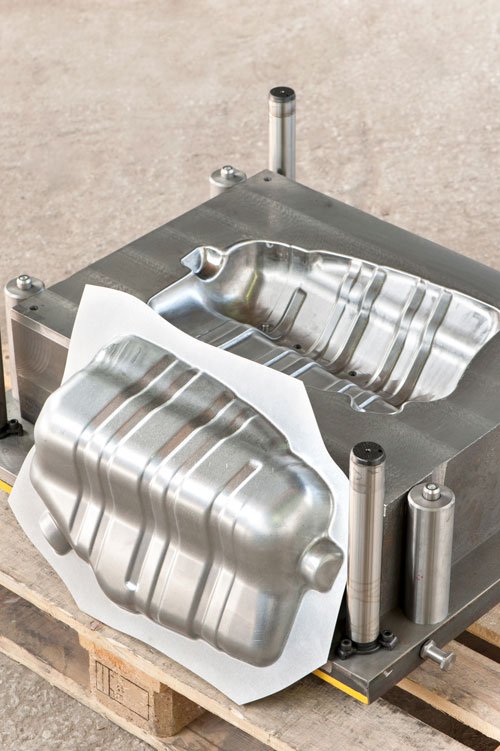
Additive manufacturing accelerates the prototyping process, enabling fast model and design optimization. It promotes the personalization of components, satisfying certain client needs without the restraints of traditional casting methods. The integration of innovative software application tools help in simulating and refining styles before manufacturing, making certain performance and precision. As the aluminum casting landscape progresses, additive manufacturing stands apart as a transformative force, fostering advancement and opening up new opportunities for design solutions throughout numerous sectors.
Lasting Practices and Recycling Initiatives
Lasting techniques and reusing campaigns are becoming progressively crucial in the aluminum casting market, provided the expanding focus on ecological responsibility. Suppliers are embracing approaches that decrease waste and energy intake, consequently decreasing their carbon footprint. One famous fad is using recycled aluminum, which requires considerably less power to process compared to main aluminum manufacturing. This change not just conserves all-natural sources however additionally lowers greenhouse gas discharges.
In enhancement, innovative casting techniques, such as die-casting and sand casting, are being enhanced for sustainability, improving material efficiency. Firms are additionally useful site spending in closed-loop systems that facilitate the reprocessing of scrap steel created throughout production. Cooperations with reusing firms are fostering a more reliable recycling facilities, ensuring that aluminum products have a longer lifecycle. Collectively, these initiatives highlight the sector's dedication to sustainability while fulfilling the growing need for ecologically liable options in design applications.
Lightweight Products for Improved Efficiency
The aluminum casting sector is not just concentrating on sustainability however also on the development of light-weight materials that enhance performance throughout numerous applications. These materials are increasingly crucial in industries such as vehicle, aerospace, and customer electronic devices, where minimizing weight can cause boosted gas effectiveness and general efficiency. Advanced aluminum alloys and compounds are being engineered to achieve remarkable strength-to-weight ratios, enabling makers to create components that are both durable and lightweight.
Technologies in casting methods, such as high-pressure die casting and financial investment casting, facilitate the manufacturing of intricate designs while minimizing material waste. This shift in the direction of light-weight materials is not only transforming item layouts yet additionally driving affordable benefits in performance and performance. As industries proceed to focus on weight reduction, the need for sophisticated aluminum casting remedies will likely grow, positioning light-weight materials as a cornerstone of future engineering developments.
Fulfilling the Demands of Eco-Conscious Consumers
As consumers significantly focus on eco-friendliness in their investing in decisions, go to my blog the aluminum casting sector is adapting to meet these developing needs. Manufacturers are currently concentrating on sustainable techniques, such as making use of recycled aluminum, which significantly lowers power consumption and greenhouse gas exhausts contrasted to key aluminum production. Aluminum Castings. This shift not only saves natural deposits yet additionally appeals to eco aware consumers
Additionally, cutting-edge casting methods are being created to reduce waste and improve power efficiency during production. Companies are additionally checking out naturally degradable layers and environment-friendly ingredients to additionally decrease their ecological influence.
Moreover, transparency in supply chains is becoming important, with brand names supplying details regarding their sourcing and making procedures. By straightening with the values of eco-conscious customers, the aluminum casting market is positioning itself for a sustainable future, demonstrating that ecological responsibility can exist together with high-quality engineering solutions.
Frequently Asked Questions
What Industries Largely Utilize Aluminum Casting Solutions?
Aluminum casting services are mainly made use of in automotive, aerospace, and consumer products industries. These sectors gain from aluminum's light-weight residential properties, corrosion resistance, and adaptability, making it an excellent choice for various applications and elements.
Exactly How Does Aluminum Casting Compare to Other Steel Casting Approaches?
Light weight aluminum casting deals lightweight residential properties, exceptional deterioration resistance, and excellent thermal conductivity contrasted to other metal casting approaches. Aluminum Castings. Its flexibility and efficiency make it a favored selection in different applications, especially in auto and aerospace industries
What Certifications Are Important for Aluminum Casting Manufacturers?

What Prevail Flaws in Aluminum Casting and Their Causes?
Common flaws in aluminum casting include porosity, contraction, and surface area flaws. These concerns often occur from incorrect pouring methods, poor temperature control, and contamination, impacting the structural stability and visual quality of the last product.
How Can I Select the Right Aluminum Alloy for My Job?
Picking the ideal aluminum alloy entails taking into consideration variables such as mechanical buildings, deterioration resistance, thermal conductivity, and application demands. Evaluating these requirements aids assure peak performance and durability for the specific job concerned.